

Why Live Events Are Still the Most Powerful Trust-Building Tool in Marketing
Every few years, someone declares the live event dead.
A new platform comes along, or a new format promises scale without the logistics, and for a while the industry leans in, convinced the answer to human connection is a better algorithm. It hasn't been yet.
In 2026, live events are still the most powerful way I know for a brand to build trust.
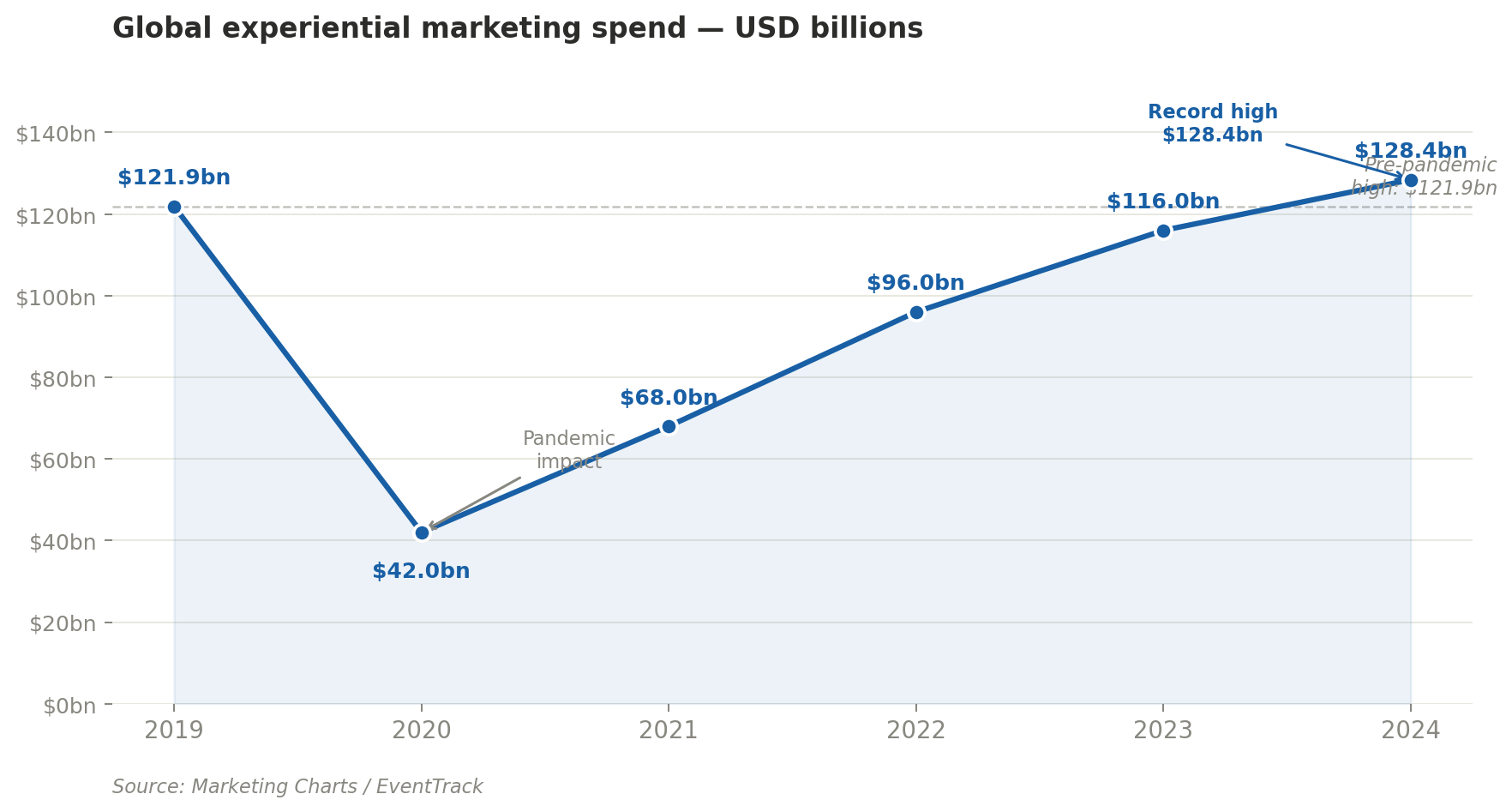
You can't fake presence
Digital marketing is brilliant at reach. It can put your brand in front of millions of people in minutes. What it can't do is make someone feel something in a room.
Trust gets built through proximity and shared experience, at the moment a brand stops being a logo and becomes something a person has felt. That happens in a physical space far more reliably than it does on a screen.
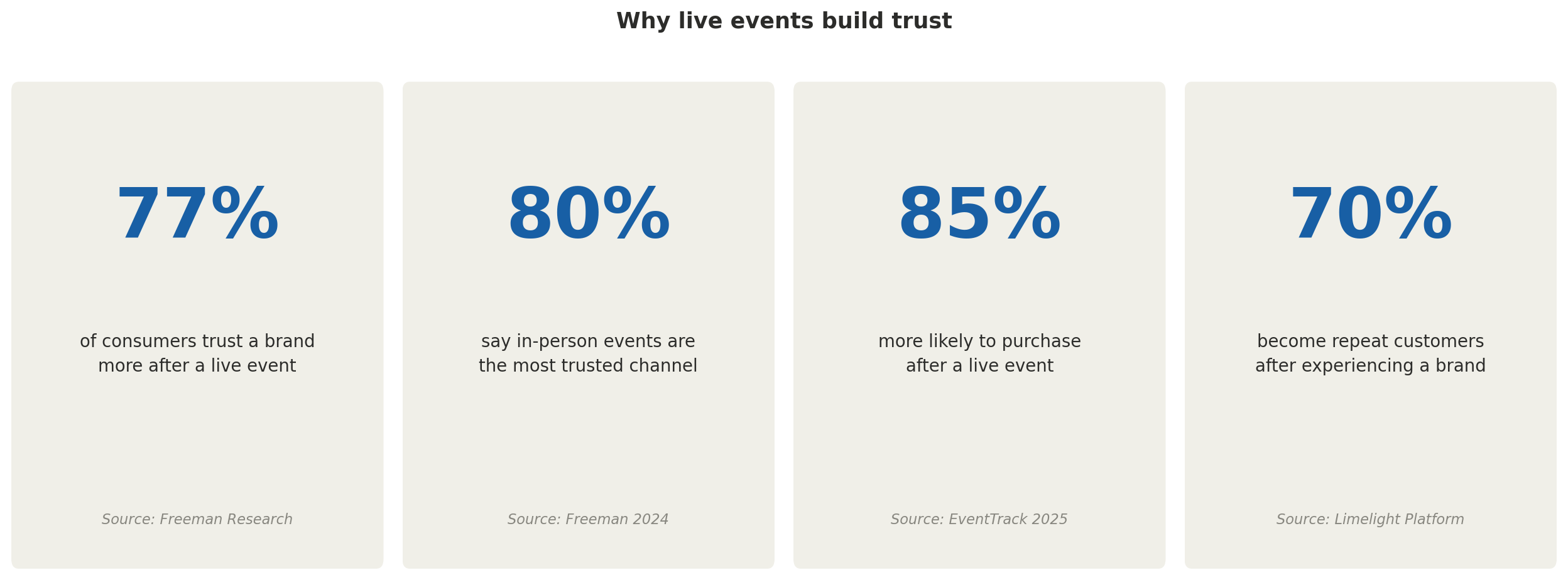
When Google needed to show the advertising world what YouTube was really capable of, they didn't send a presentation deck. Together we built YouTube Brandcast, an immersive brand experience that put the advertising industry inside the world of YouTube. It brought a digital only platform to life in a room, built real advocacy for the brand, and turned a few sceptics into believers.
An above the line or digital campaign can't do that on its own.
B2B trust is built IRL
This matters even more in B2B. The decision to commit to a new agency, platform or partner is rarely made on the strength of a whitepaper. It's usually made after a conversation, a dinner, or an event where the brand was brave enough to create a real moment rather than another piece of branded content.
Sense Group's ABM (Account Based Marketing) CxO programme for Canva, delivered globally across EMEA, APJ and the Americas, is built on this. Senior decision makers don't give their trust to a brand on its own. They give it to the people and experiences that earn it.
The EMEA opportunity is underserved
Across the UK and Europe, the appetite for high quality live experience marketing is growing fast, but there still aren't many agencies that can design, produce and measure at that level.
Plenty of experiential agencies are strong on production. Fewer are strong on strategy, and fewer again can connect an event in Helsinki to a pipeline result in New York. There are global agencies that can cover that footprint, but their business model, culture and systems weren't built for how fast things move now that AI is part of the work.
At Sense, we combine integrated AI workflows with IRL hubs in Sydney and London, a global remote team and a fintech backbone. That combination lets us move quickly when things change, which they do constantly.
Measurement has caught up
The old argument against live event marketing, that you couldn't prove the ROI, no longer holds. Brand tracking, dwell analytics, social amplification, CRM attribution and pipeline influence modelling have made experiential marketing strategy as measurable as any paid channel.
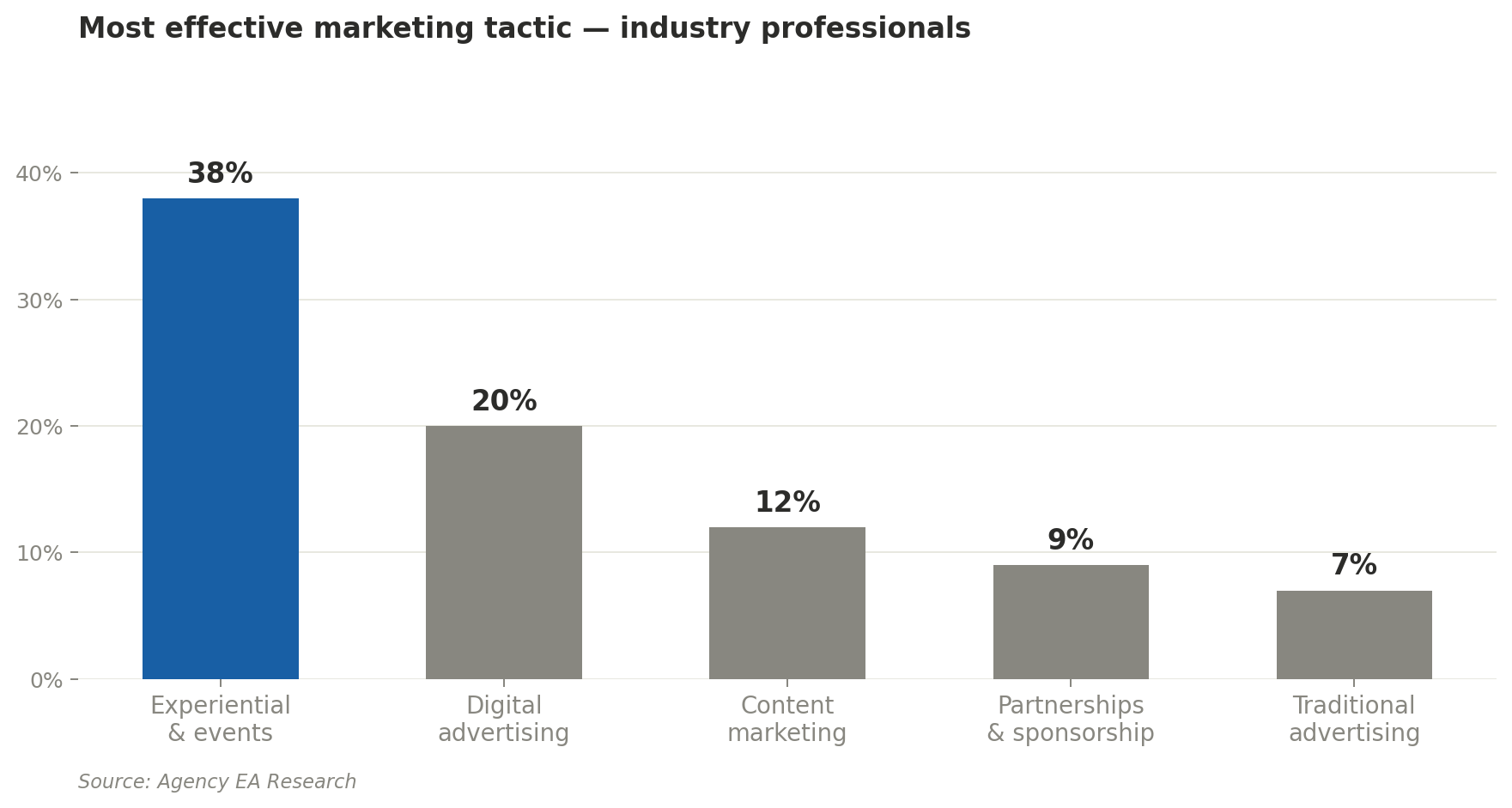
The brands doing well in EMEA right now treat live experience as a channel in its own right, with its own objectives and KPIs and returns that build over time, rather than as a line item in the events budget.
Why the room still matters
We've watched the industry move to digital, back to live, and back again. With AI and the sheer volume of content out there, the world is only getting more digital, and each time the conclusion has been the same.
People remember what they experienced in a room long after they've forgotten what they scrolled past.
Sense Group is a brand experience agency with offices in Sydney and London, delivering live events, brand activations and experiential marketing programmes across APAC and EMEA.
www.sensegroup.co
Watch here