

Every agency is talking about AI. Far fewer have worked out the rules for how their people should use it well.
The conversation has defaulted to speed and cost, meaning faster turnarounds, leaner production and more output for less. That framing misses the point for anyone working in brand experience, where most of the value lives in the details: the spatial logic of a room, the rhythm of a live moment, the way a brand feels when someone walks through the door.
Speed is useful, but accuracy matters more, and the real question is whether you can have both.
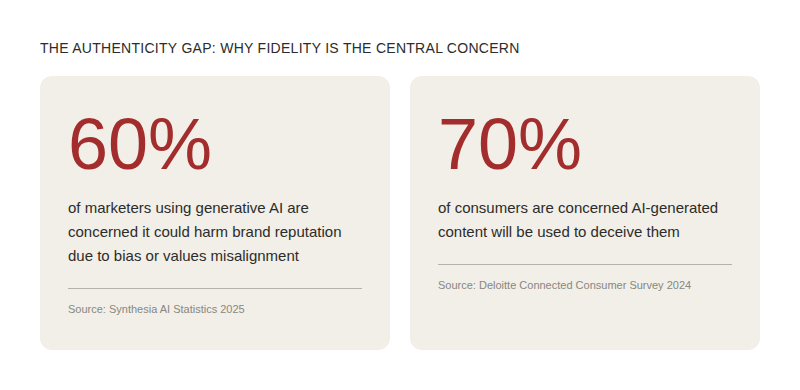
We think you can, but only if AI sits in the right place in the workflow.
Where AI earns its place in experiential production
The tools we use are Google Gemini, Google AI Studio, NotebookLM, Veo 3 and Runway. We don't treat them as creative replacements. We use them on the parts of the production process that have always taken time without adding much strategic value.
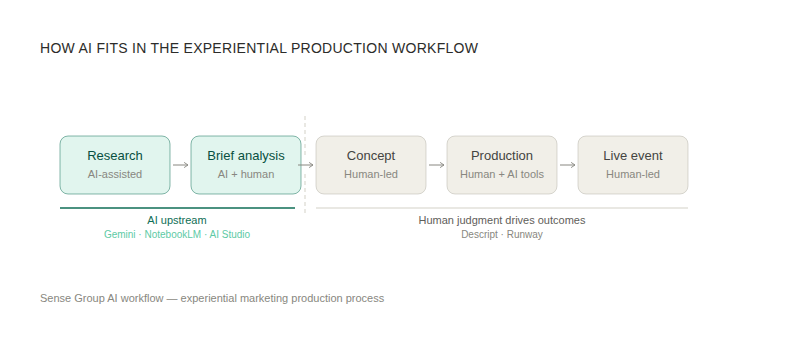
That means research synthesis, brief analysis, script iteration, transcript processing and early concept visualisation. These are high volume tasks that need human judgement at the end rather than human creativity throughout, so AI handles the volume and our team makes the calls.
The result is that strategists and creatives get to the interesting problems faster, and spend more of their time thinking rather than processing.
The accuracy risk is real, and it's a workflow problem
When AI produces generic work in an agency, the problem usually isn't the technology. It's where the technology sits in the process.
When AI generates final outputs (copy, concepts, design) without meaningful human input upstream, the work reflects the average of everything the model has seen. For a commodity product that might be acceptable. For a brand experience designed to connect real people in the real world, it's a serious problem.
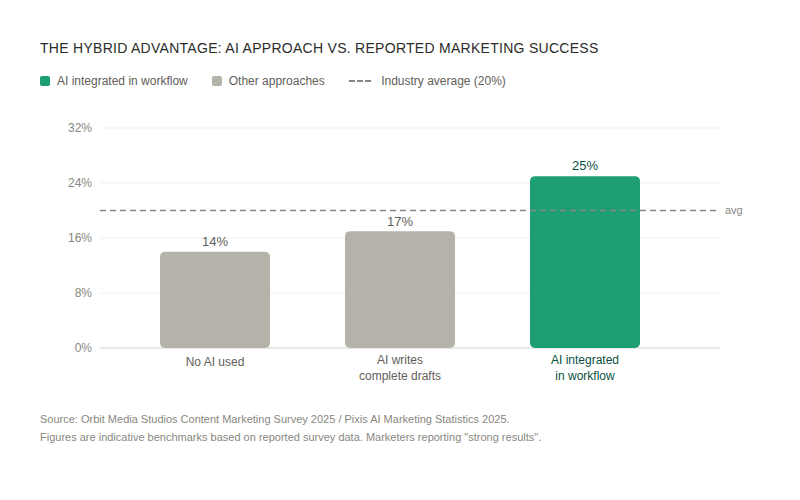
We keep AI upstream, where it informs and speeds up the human process rather than replacing it. The creative brief, the spatial concept and the experience narrative are still built by people who understand the brand, the audience and the specific tension the program needs to resolve. AI doesn't make those decisions, but it helps our team make better ones.
Why it matters for enterprise event marketing
Enterprise technology brands have a specific challenge. Programs are global, audiences are sophisticated, and there's very little tolerance for anything that feels templated. A CTO walking into an executive briefing, an ABM event, or a partner summit doesn't want to feel like they're inside a generic campaign. They want to feel that the brand understands their world, their challenges and their day to day bottlenecks.
That quality of work needs real strategic and creative investment. Account based marketing events in particular need a level of personalisation and intent that no AI tool can produce on its own. AI makes that investment go further, but it doesn't replace it.
The practical position
We're not claiming AI comes anywhere near solving B2B experiential work. The technology is moving quickly and the right uses for it are still being worked out. Our view is that agencies who bring AI in carefully, and protect the parts of the process that need human judgement, will do better work than those who don't.
Faster only helps if the work is still good, and that's the standard we hold ourselves to at Sense.